
Generating, Running and Sharing Synthetic Research. Really?
A step-by-step walkthrough of how to generate your Synthetic User panel, run interviews, and share your research — from setup to insights report
So you’ve picked your interview type. Great.
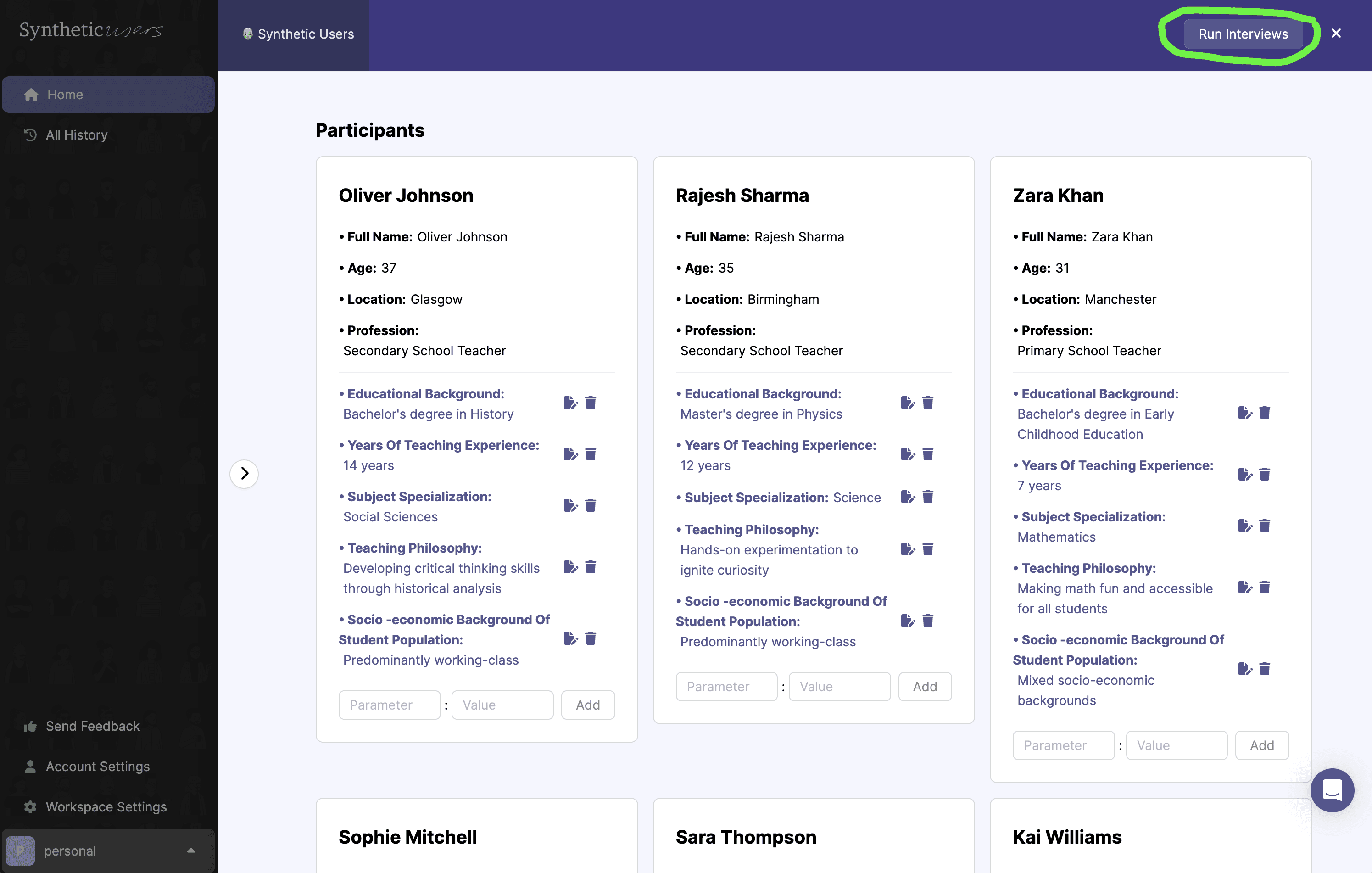
Next it’s time for you to generate and edit your Synthetic Users. The button says generate SUs.

Once you do do so and you get your Synthetic User Panel — we’ve made it easy for you to edit with what we call a Synthetic Users editor. No, they don’t yet have photos (we did not want any distractions.) Focus on the parameters that are truly important. Everything else is noise. This is where you edit and adjust your synthetic users, not where you choose your next date.
Then you simply press Run Interviews in the top right.
Run your interviews
Run your interviews and then dive in. Don’t just rush to creating the report, there is a lot of diversity in our interviews. Content that will surprise you. If you wish to summarise everything quickly: hit that Create report button and get some instant insight.

A little note on the nature of interviews. They are not like organic interviews (interviews with real people). You’ll find that responses are denser, there is less chit chat and huhs… and less waiting around. There is nothing wrong with organic interviews, they’re just… different. What is important is that the content is similar. And yes, it is.
Unlike organic users, Synthetic Users won’t just log off and go away when the interview is done. You can ask your Synthetic Users follow-up questions at the bottom of each interview.
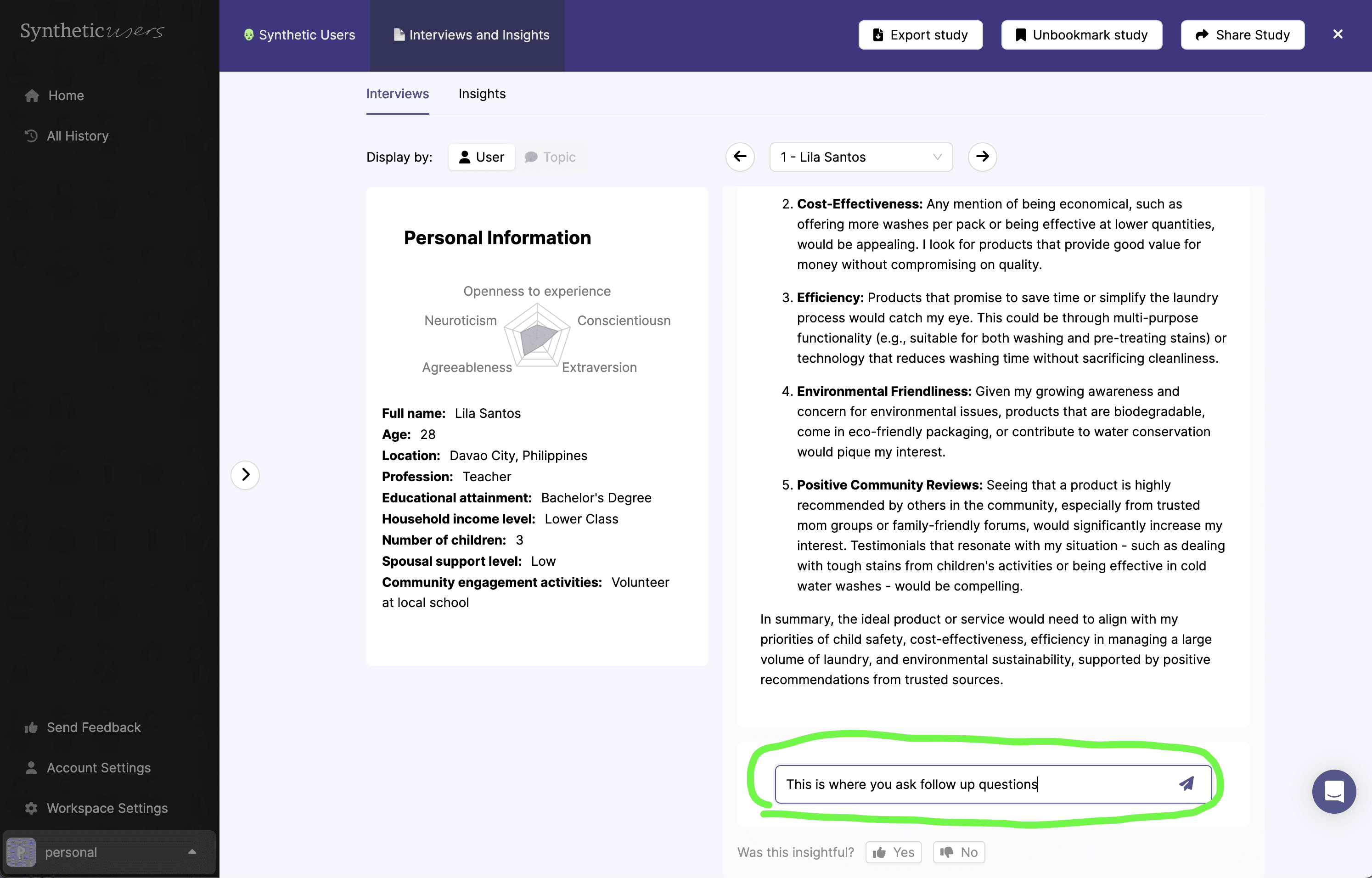
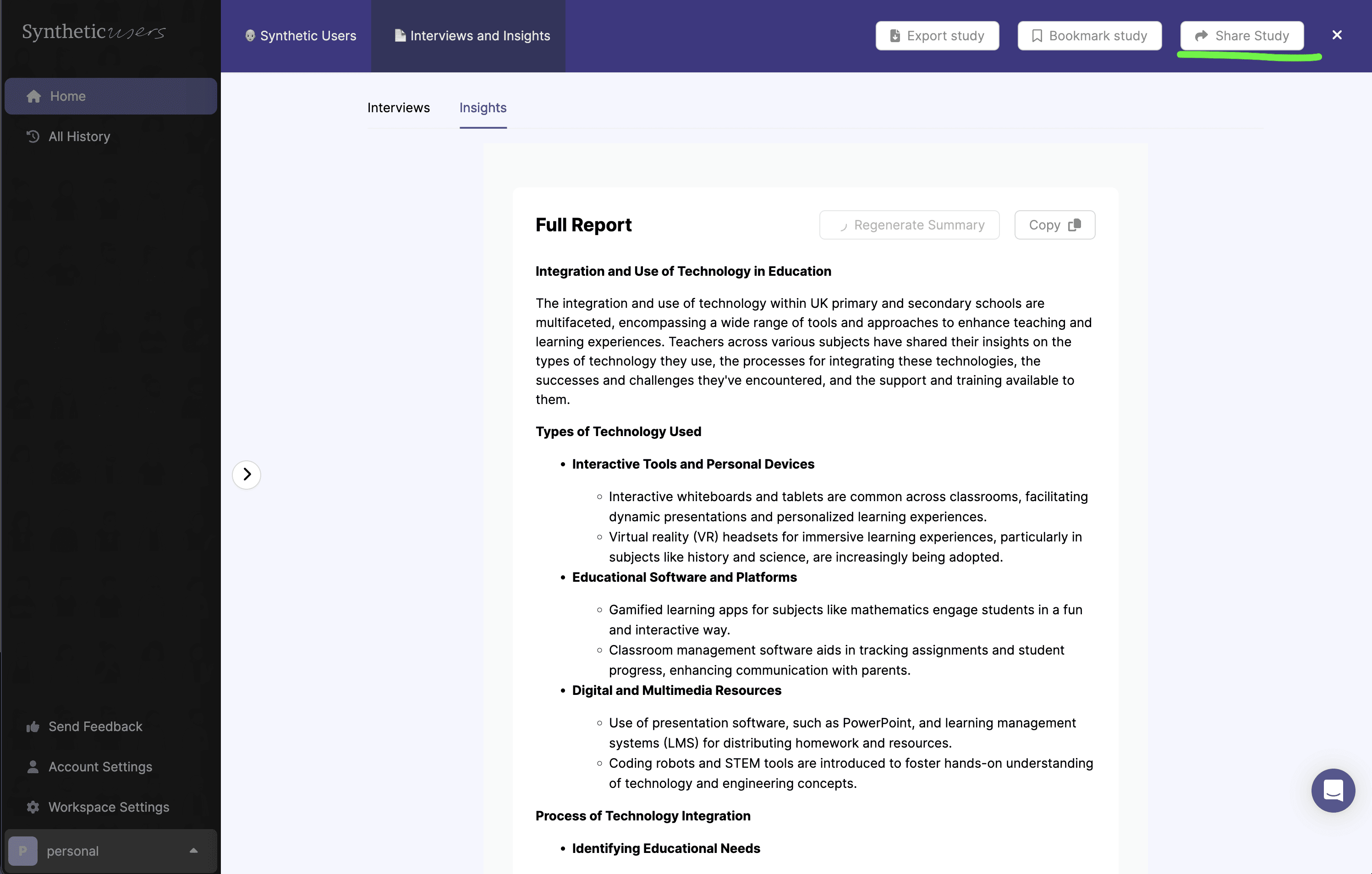
Your insights will look like this (see image below). If you’re not happy with them (which we doubt) press the Regenerate button. Don’t you just wish you could do that in your real life? We do.
If you’re happy with them you can bookmark, export and share. All on the top right.
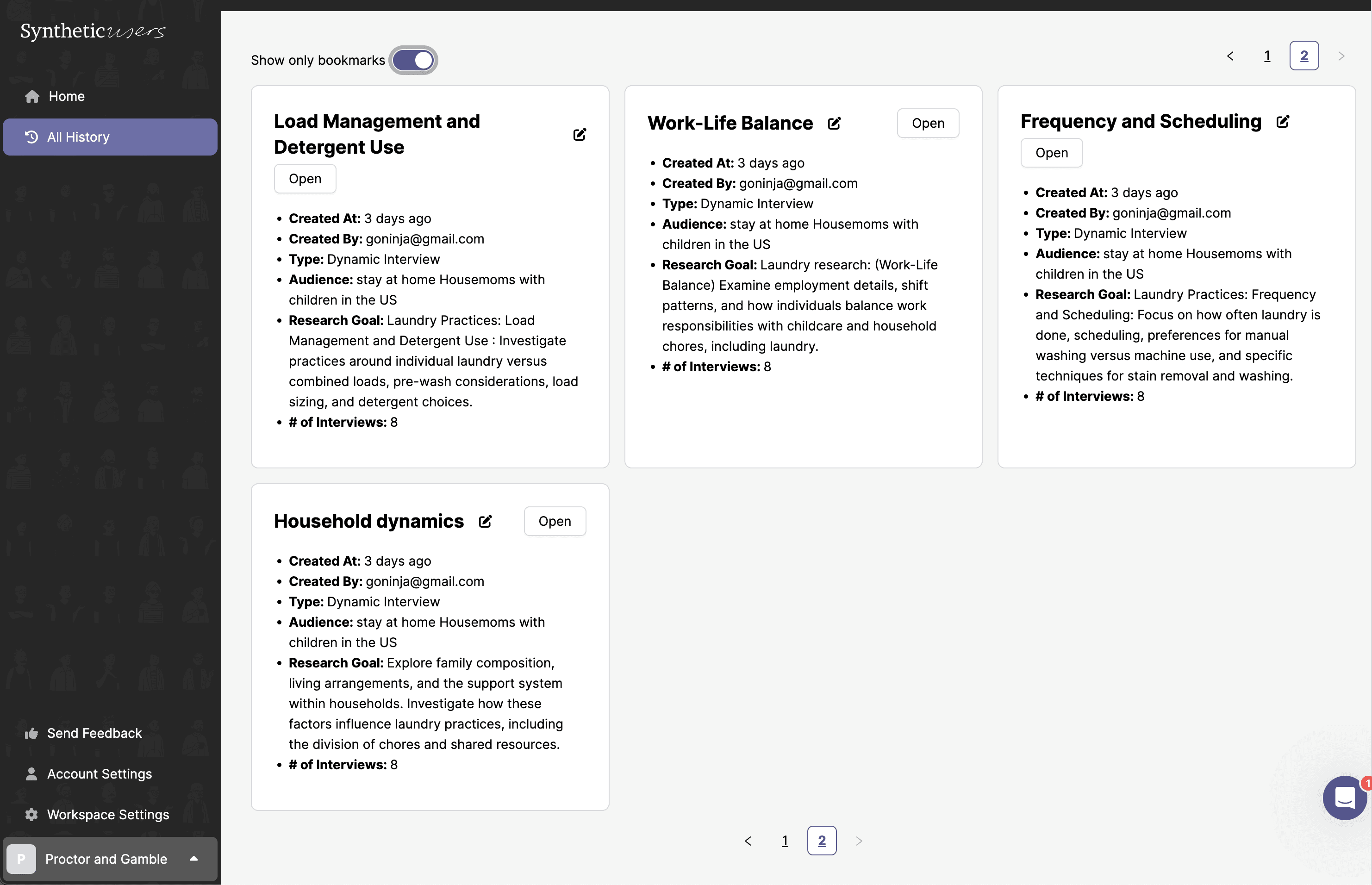
Your Synthetic User History
Where do all the studies go when you run them? They go to your history, also known as Synthetic Heaven. From your Synthetic User History you will be able to organise and open your studies, forever.
Thank you :-)
Releated Articles
More articles for you

Synthetic users, an intro
A quick video walkthrough introducing the Synthetic Users platform — covering key navigation and core features for new users getting started.

Introducing Iris
Introducing Iris, Synthetic Users' research agent. A tutorial on how to work alongside Iris to define study parameters, run interviews, and get precisely structured insight reports.

Multi-study planner: plan and run multiple studies with different audiences
PRISMA is Synthetic Users' multi-study planner — a single interface to design, manage, and run multiple studies with different audiences simultaneously, without juggling separate projects.

Enrich your Synthetic Users with your data. RAG tutorial.
Learn how to enrich Synthetic Users with your own data using Retrieval-Augmented Generation (RAG) to make AI participants more context-aware and accurate.

Synthetic Users Leadership Webinar: Mapping the Synthetic Research Industry
Recap of the Synthetic Users Leadership Webinar featuring Wikipedia founder Jimmy Wales — covering the state of AI, synthetic research risks, differentiators, and the road ahead.

Help! How do I go beyond the average with Synthetic Users?
How to move past generic insights with Synthetic Users by changing your research mindset, framing better goals, and probing deeper — just like you would with organic participants.

Features: Knowledge Graph, Cloning Research, Exporting Annotations, Searching inside History...
A roundup of four new Synthetic Users features: Knowledge Graph for visualising interview themes, Research Cloning, Annotation Exporting, and searching inside your research history.

What's new? 4 new features
A look at four new Synthetic Users features: a Research Assistant UI, expanded language support, and more — designed to help teams run better research faster.

Generating, Running and Sharing Synthetic Research. Really?
A step-by-step walkthrough of how to generate your Synthetic User panel, run interviews, and share your research — from setup to insights report

What to do when you feel your Synthetic Users are being too generalist
Three practical steps to get more specific, nuanced insights from Synthetic Users — including how to probe deeper, ask better questions, and when to complement with organic research.

Which interview type should I pick?
A guide to Synthetic Users' three interview types — dynamic script, custom script, and concept testing — and how to choose the right one based on your research goal.

Do annotations matter to researchers?
Why annotations are essential to research — from medieval monks marking manuscripts to modern researchers highlighting insights. How Synthetic Users brings annotation into AI-powered research.

The transition to Continuous Insight and where we excel
A look at four new Synthetic Users features: a Research Assistant UI, expanded language support, and more — designed to help teams run better research faster.

Don’t fall into the: “It’s not real. It’s just programming.“ fallacy.
Why dismissing AI-generated feedback as "just programming" is a mistake. The value of synthetic research lies in the insights it generates — not in the origin of the participant.

Products creating products
A reflection on how AI is transforming product development — and how Synthetic Users fits into a future where products help create better products through real-time synthetic feedback loops.

Synthetic Users: Merging Qualitative and Quantitative Research, in seconds.
How Synthetic Users blurs the line between qualitative and quantitative research — enabling teams to get the depth of qual at the scale and speed of quant, in seconds.