
We synthesize brains
so you can predict
buyers, CFOs, doctors, voters, policy makers, employees, juries and markets
Simulate how any audience thinks, decides and reacts. Test a product, a message or a policy on synthetic respondents and see what they would do, and why, in minutes.
Every brain is a synthetic respondent. Click one to meet them.
Every brain is a synthetic respondent. Tap one to meet them.
“What you are building will radically democratize access to qualitative research within companies.”

Johan Van Langendonck
Director of Strategy, Bridgestone Mobility Solutions
“The AI feedback lined up with human feedback over 95% of the time.”

Adam King
Behavioural Scientist
Trusted by teams at









85 — 92%
Synthetic-organic parity in independent comparison studies. Measured across thematic overlap, depth & qualitative alignment.
21+
Peer-reviewed papers supporting the synthetic research thesis. Incl. Science Magazine, The Atlantic, SAGE Journals.
$2-60
Per interview, versus $100+ with traditional research agencies. No recruitment fees, no scheduling overhead.
SOC 2
Your data is private and belongs to you alone. Measured across thematic overlap, depth & qualitative alignment.
Use cases
Where synthetic research
fits your workflow
Synthetic Users is designed as a discovery co-pilot, not a replacement for real research. Use it to front-load the problem space, fine-tune your questions, and spend your organic research budget where it matters most.
01
Early exploration & problem discovery
Map the problem space before committing to a full study. Run Problem Exploration interviews to surface user behaviors, pain points, and context — and arrive at organic research with better questions.
02
Concept & messaging testing
Test ideas, product concepts, and campaign messaging before launch. Use Concept Testing and Custom Script Interviews to get structured feedback on multiple directions in parallel — in minutes, not weeks.
03
Continuous insight between research phases
Fill the gaps when traditional research is too slow, too expensive, or impossible to schedule. Run iterative validation studies throughout the product lifecycle — not just at milestone moments.
Who it’s for
Built for anyone who needs to understand people faster
Synthetic Users isn’t a researchers-only tool. Our demo calls include PMs, marketing leads, agency owners, innovation managers, and engineering leads anyone whose decisions depend on understanding users.
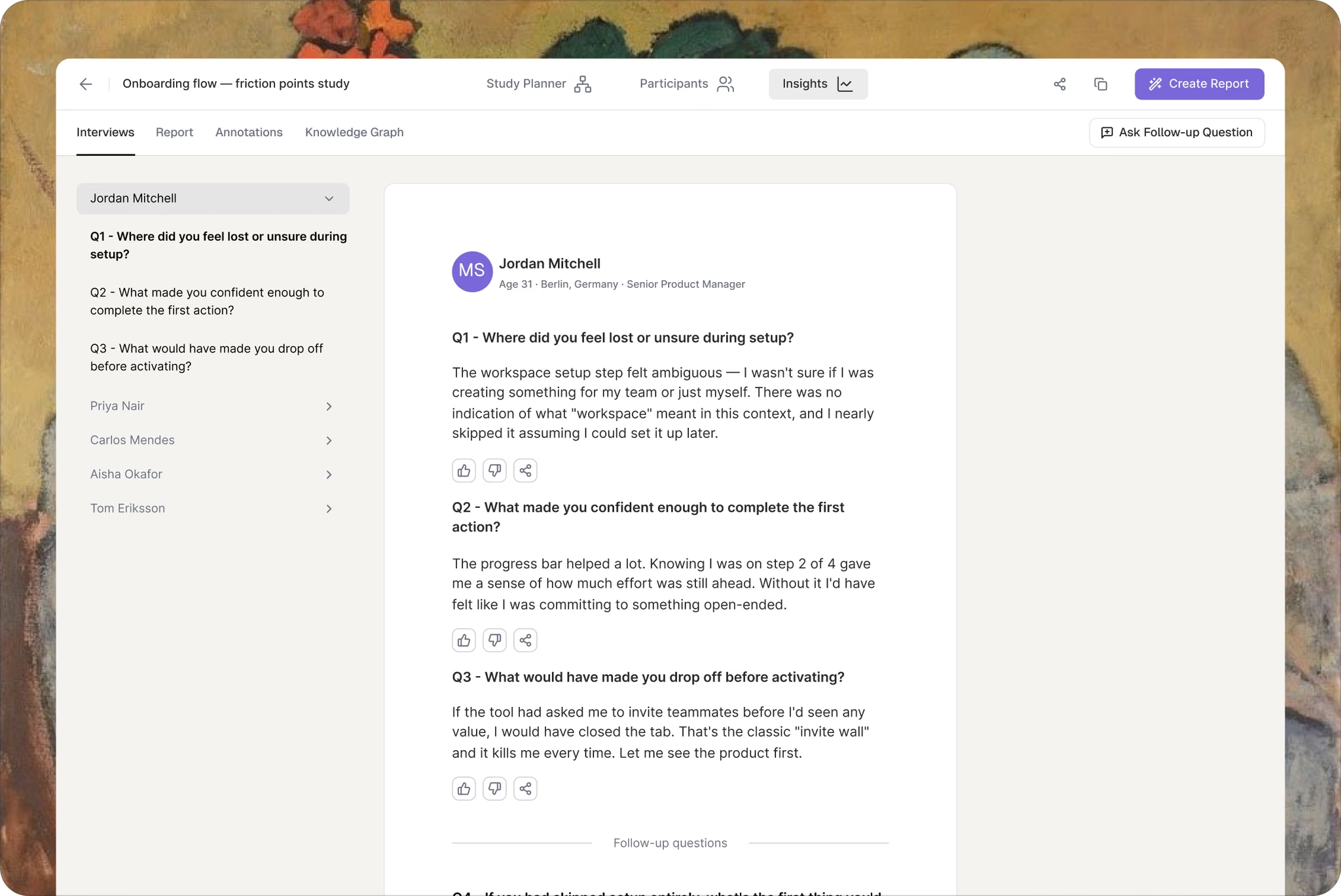
Researchers front-loading the problem space
Run problem-exploration interviews to surface user behaviors, pain points, and context — then arrive at organic research with sharper questions and stronger hypotheses. Spend your participant budget where nuance matters most.
How it works
A research workflow.
Not a chat interface.
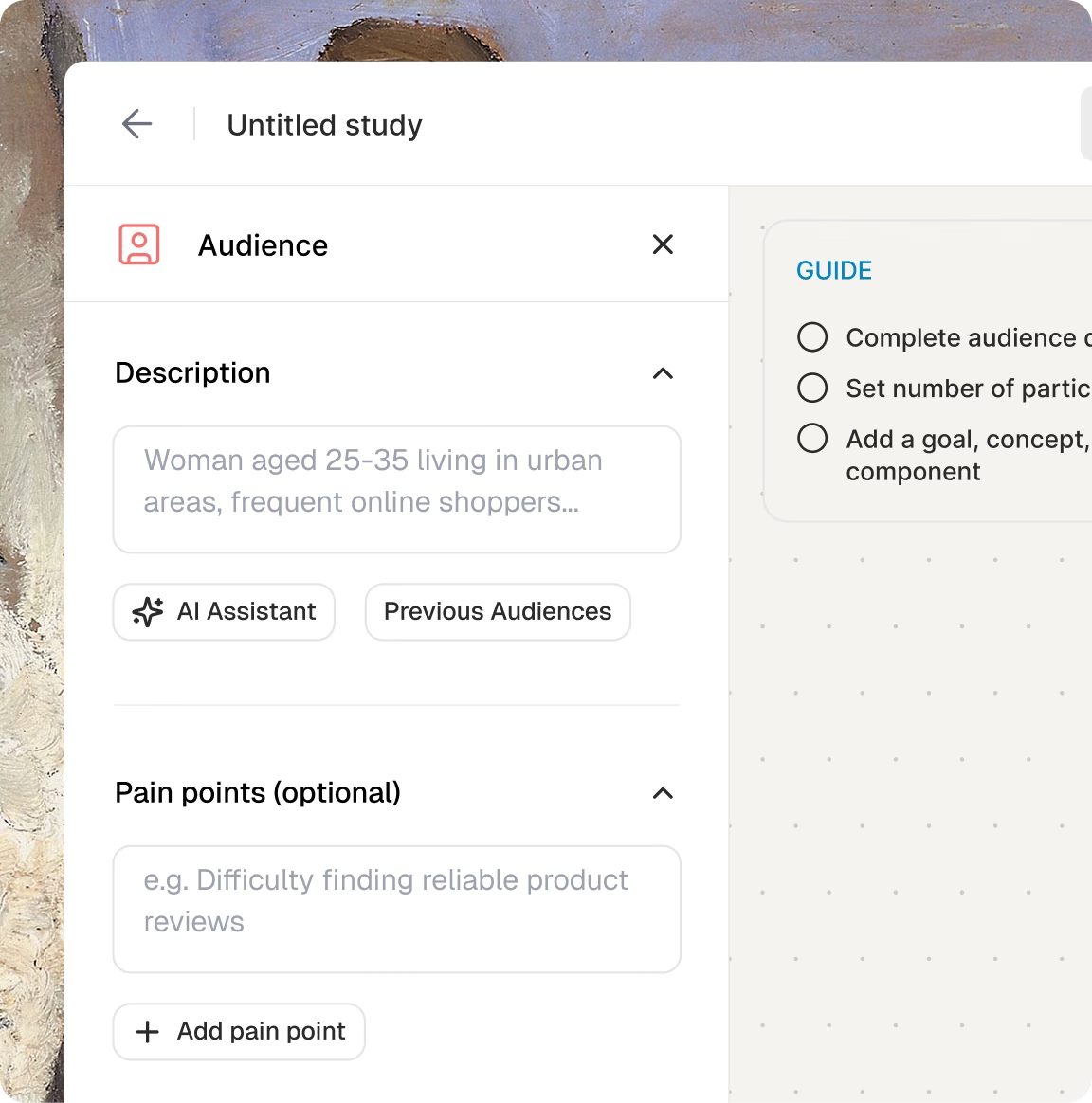
Synthetic Users uses a multi-agent architecture where AI participants develop individual personality profiles based on the OCEAN model and maintain full context and continuity across every interview — the thing general AI tools can’t do.
The science
We obsess over
synthetic-organic parity
The most common question we get is: how do we know it’s accurate? We’re very open about how we measure it, where we fall short, and how we improve. Here’s how we think about it.
What people say
From the people
using it every day
“What you are building is absolutely massive. This is a breakthrough for people wanting to validate an idea, look at how to solve a problem and accelerate the validation of hypotheses.”

Henrick Farías
Founding Team @Jeeves
“I just tried your product and I’m honestly scared. This reminded me of an episode of black mirror.”

Diego Jorge
Product Manager @Jeeves
“What you are building will radically democratize access to qualitative research within companies.”

Johan Van Langendonck
Director of Strategy, M&A and Partnerships at Bridgestone Mobility Solutions
“Oh! And I’m also someone who’s used Synthetic Users to give me starting intelligence to then go and confirm that feedback with real life people. And guess what? The AI feedback lined up with human feedback over 95% of the time.”

Adam King
Behavioural Scientist
Sample output
What you actually
get back
The report includes an executive summary, key themes, verbatim participant quotes, and recommendations — formatted for stakeholder sharing. You can also drill into individual transcripts, ask follow-up questions, and annotate specific moments.
Our pro tip: start with a recent study you have top of mind and run it through Synthetic Users. Compare the outputs side by side. That’s the fastest way to build confidence in the method.
Book demoJames Rivera
Age 29 · Austin, TX · Product Manager
Q1: Can you describe what a typical night shift looks like for you from start to finish?
shifts slightly in chair
Right, so I get to the ward around 9:45pm, bit early to get myself sorted before handover at 10. The day staff fill us in on what’s been happening with each patient — who’s had a rough day, new admissions, any special instructions from the doctors. Takes about twenty minutes usually.

James Rivera
Age 29 · Austin, TX · Product Manager
Q1: Can you describe what a typical night shift looks like for you from start to finish?
shifts slightly in chair
Right, so I get to the ward around 9:45pm, bit early to get myself sorted before handover at 10. The day staff fill us in on what’s been happening with each patient — who’s had a rough day, new admissions, any special instructions from the doctors. Takes about twenty minutes usually.
FAQ
The questions we hear on every demo call
Is this meant to replace real user research?
No. Synthetic Users is a discovery co-pilot. It helps you front-load the problem space, sharpen your questions, and decide where to spend organic research budget. Real user research stays essential for validation and edge-case work.
How accurate are the synthetic participants?
Across our independent comparison studies, parity sits between 85% and 92% depending on audience type, measured across thematic overlap, depth, and qualitative alignment. We publish the methodology and the gaps openly in our /science section.
How is this different from asking ChatGPT?
ChatGPT is a single agent without continuity, audience definition, or interview structure. Synthetic Users runs a multi-agent architecture where each participant develops a stable personality profile (OCEAN-grounded) and maintains full context across every question.
Is 10 participants enough? We normally need statistical significance.
For qualitative work, 10–12 well-defined participants typically reach saturation — and our saturation score lets you see when new participants stop adding novel themes. For quantitative confidence, you can scale to hundreds in the same study.
Can we use our own proprietary data to enrich the participants?
Yes — RAG-grounded studies let you feed transcripts, support tickets, customer conversations, and any other proprietary data into the participant model. Your data stays yours; we don't train shared models on it.
What are the security and compliance requirements?
We're SOC 2 compliant, run regional infra (EU + US), and offer a Data Processing Addendum. See /dpa for the legal detail.
Get started
See what your team
could learn this week.
30 minutes. We’ll run a live study with you, show you the output, and answer every question on your list.
Book demoNo commitments. Bring your skepticism, we’ll address it.