
Tutorials
Iris, now inside every study
Iris has always been the research agent in your project. Now it's in every study too — a copilot scoped to exactly one study, that helps you set it up, and then helps you make sense of what it found.
You could already build and run a study by talking to the project-level Iris. What's new here isn't the setup. Once your interviews are in, Iris inside that study knows only this study's data. No re-explaining the research question, no risk of mixing up findings from a different study in the same project. Ask it a question, and the answer comes straight from the transcripts sitting right next to it.
Here's what that looks like end to end, from a blank study to a real finding. One study, one thread, nothing edited out.
Describe the research. Iris builds the study.
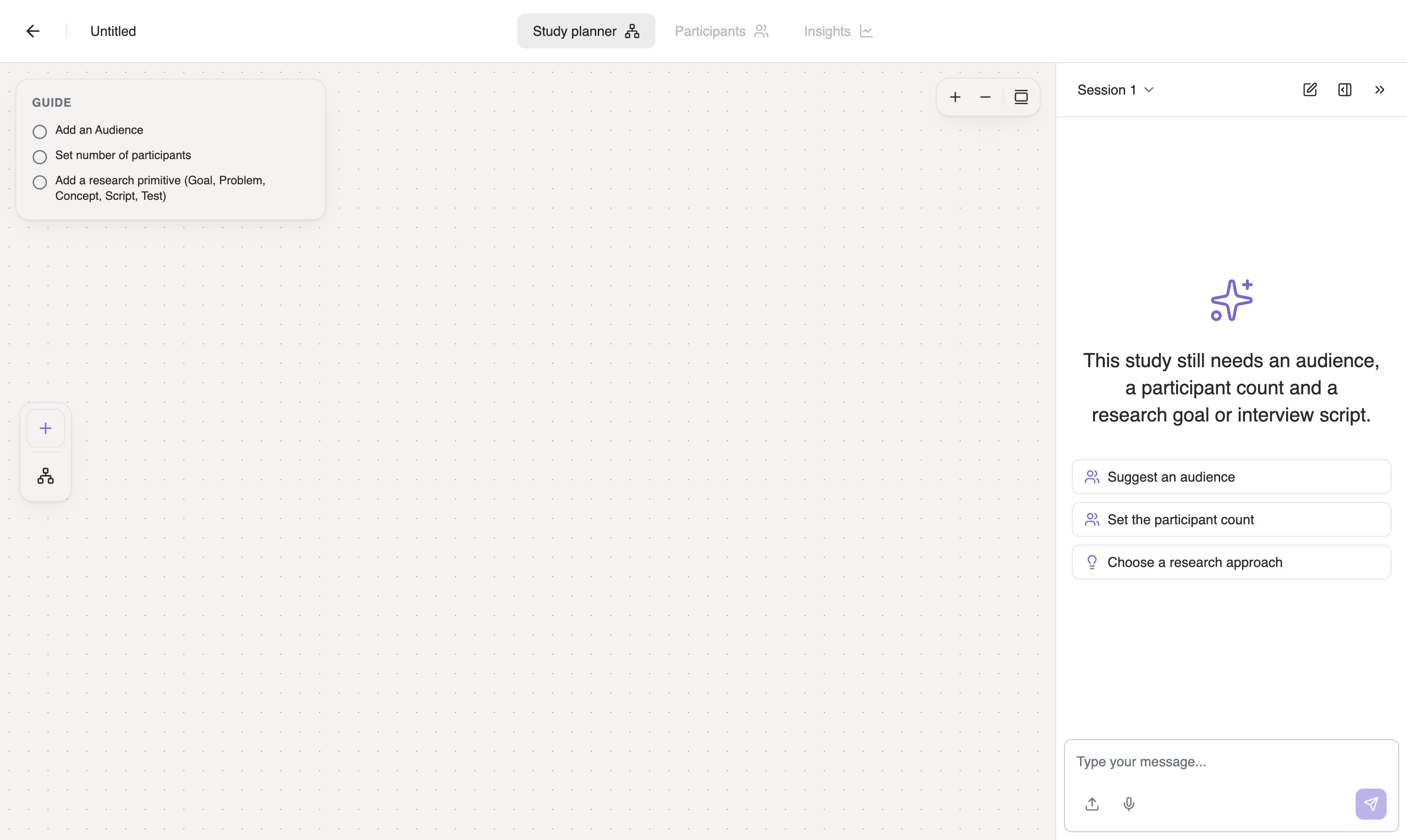
Open a new study and Iris is already there, scoped to this study alone. It doesn't open with a blank greeting either. It opens by telling you what this particular study is still missing: an audience, a participant count, and a research goal or interview script.
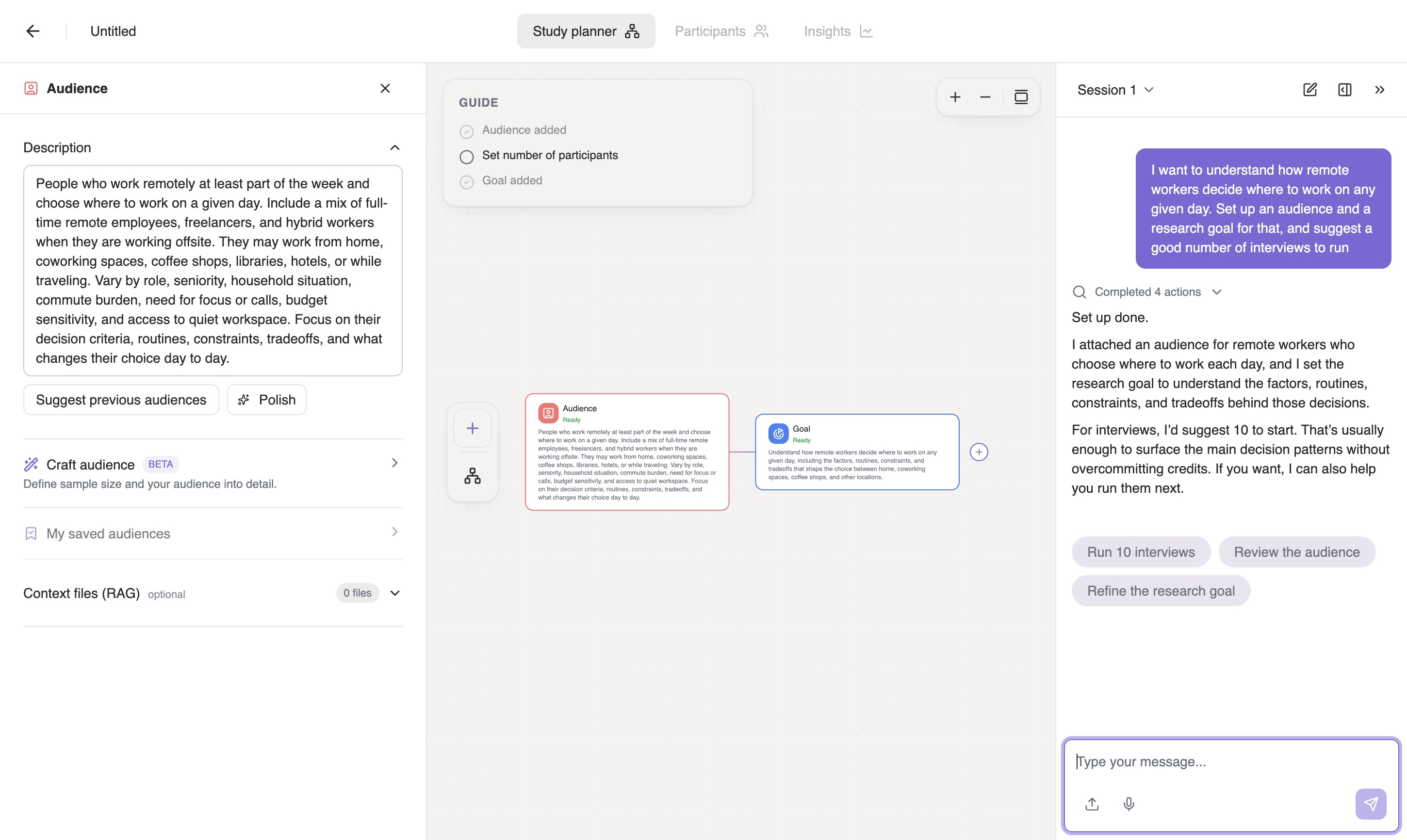
One message is enough to get moving:
Iris drafts the audience, writes the research goal, and reasons about sample size in the same reply. The first two land on the canvas as it works, live.
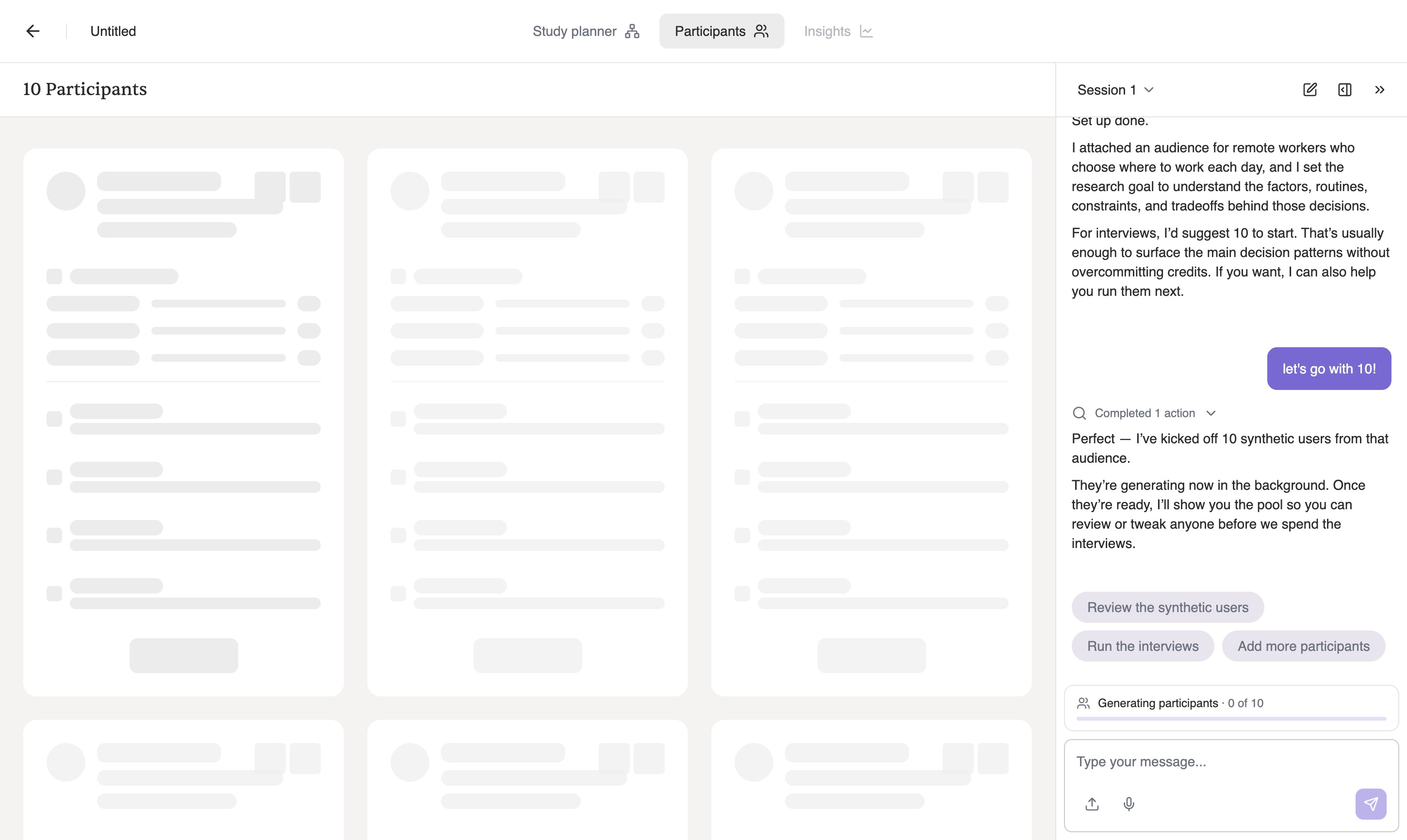
Iris asks before doing anything that costs you something real. It proposed the number; spending the credits is still your call, made in the same conversation.
Ask it what your interviews actually found.
This is the part a project-wide copilot can't do well. Once the interviews finish, this study's Iris has read every one of them, and only them. It also carries more than thirty analysis tools scoped to this one study. Asking a real question exercises all of it, not a single canned summary. Four examples, in one continuous thread.
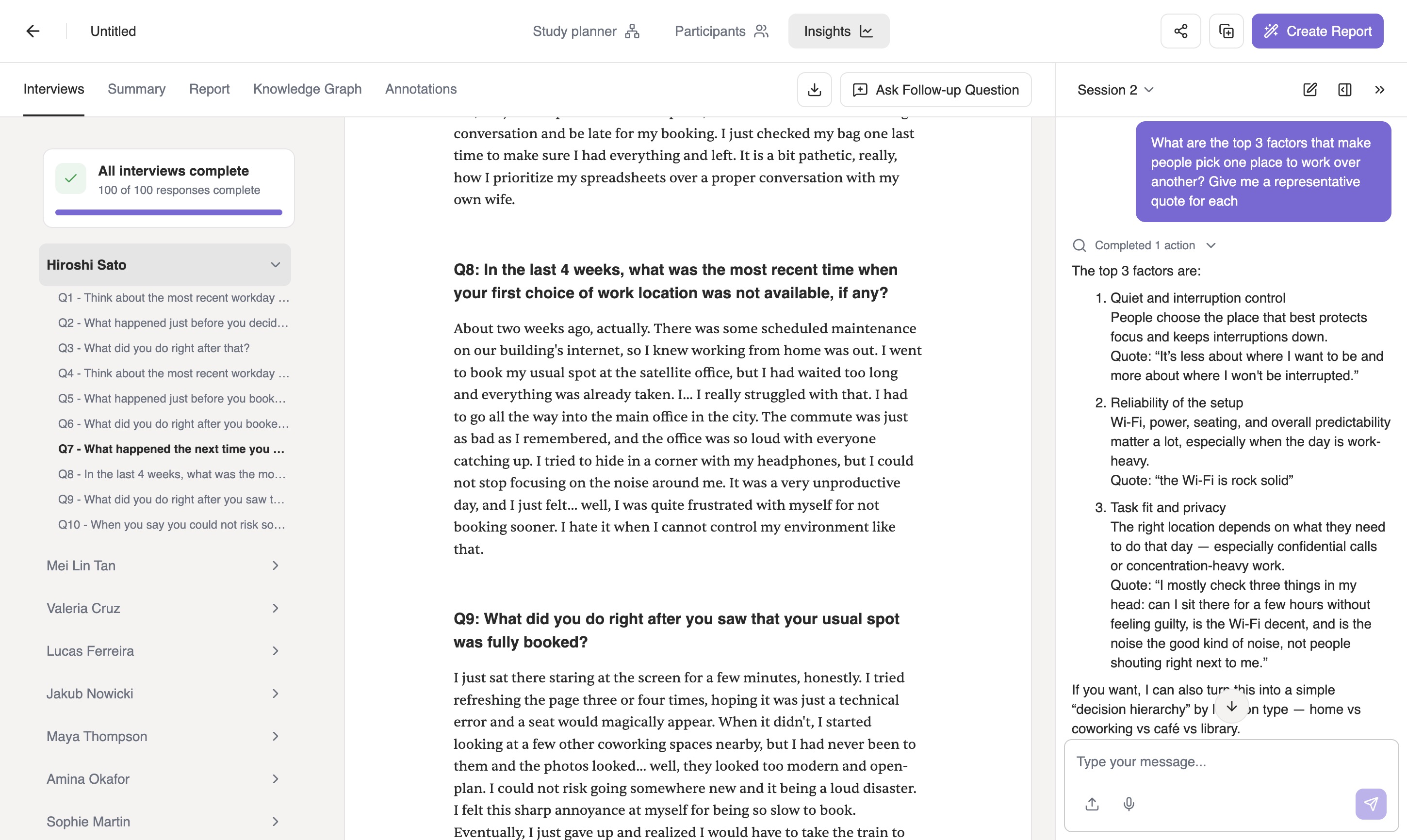
Ask for the finding, not a summary
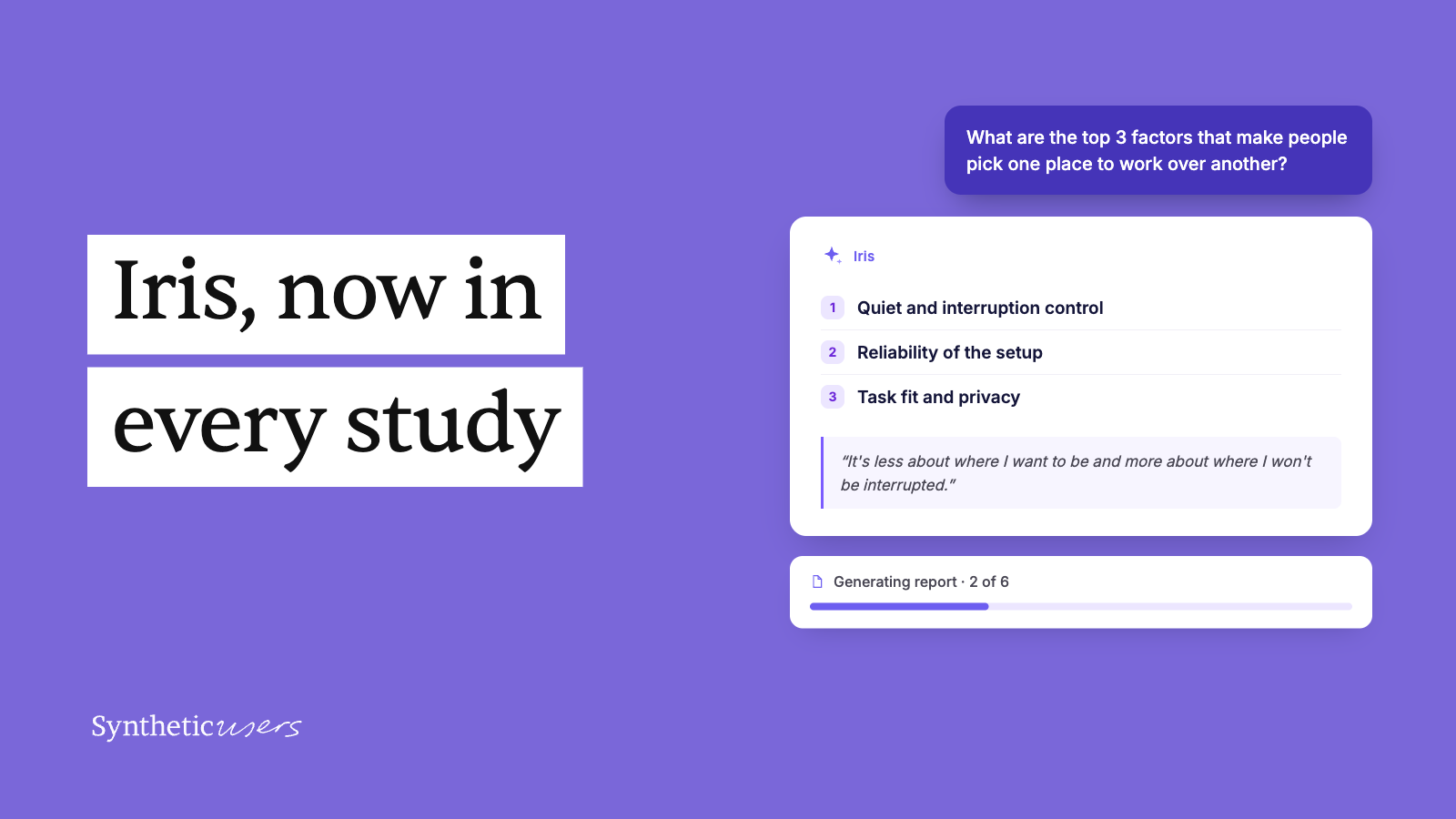
What comes back is ranked and quoted: quiet and interruption control, reliability of the setup, task fit and privacy. And the quote under the first one reframes the whole study. “It's less about where I want to be and more about where I won't be interrupted.”
Push it to follow up, on a specific person
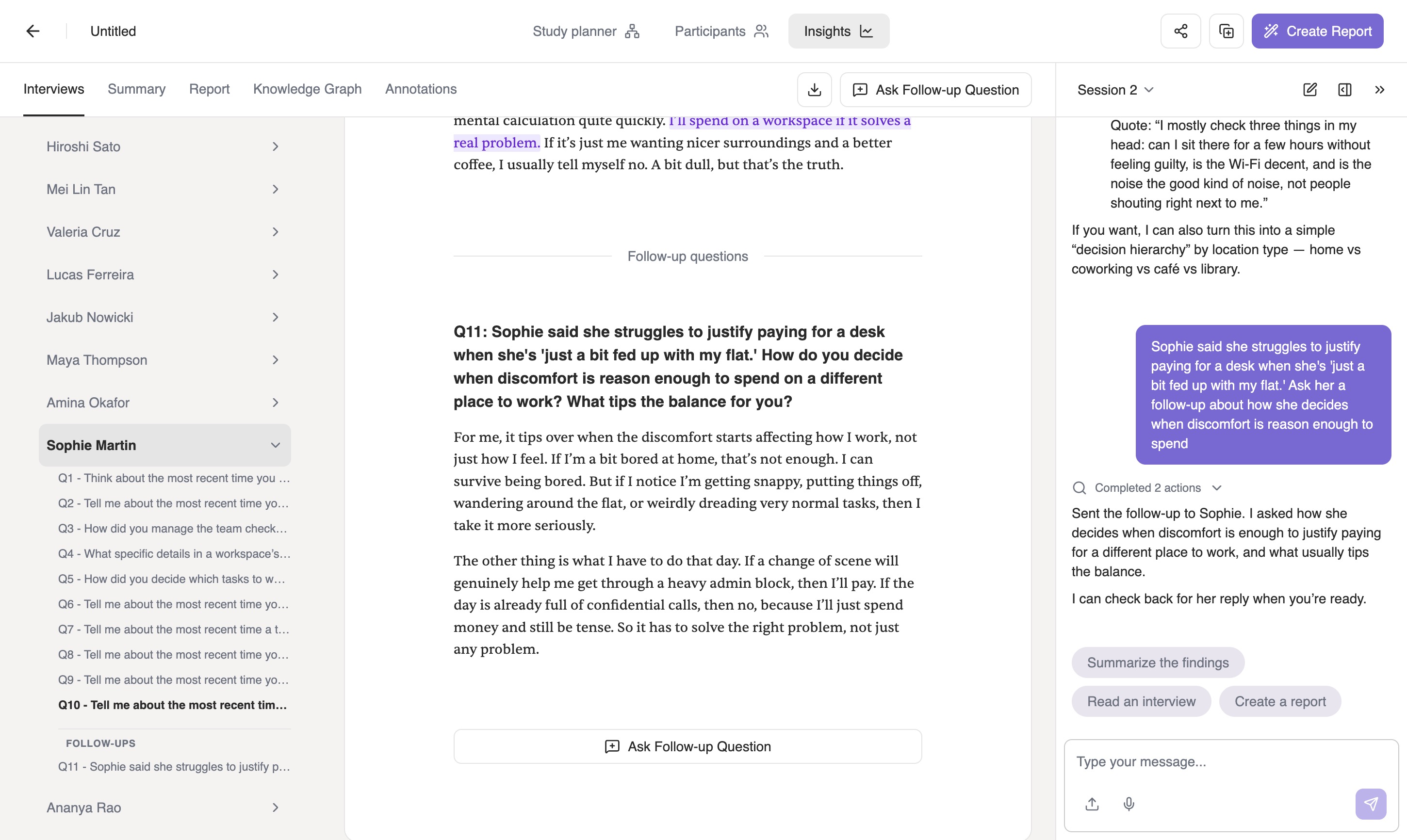
A summary tool stops at the first answer. Iris can go back into one participant's session and ask something more pointed, grounded in exactly what she already said, not a generic template question.
Iris turns that into a real interview question. “How do you decide when discomfort is reason enough to spend on a different place to work? What tips the balance for you?” It sends it into Sophie's session, where it lands as Q11 alongside her original ten.
Shape the report before it's written
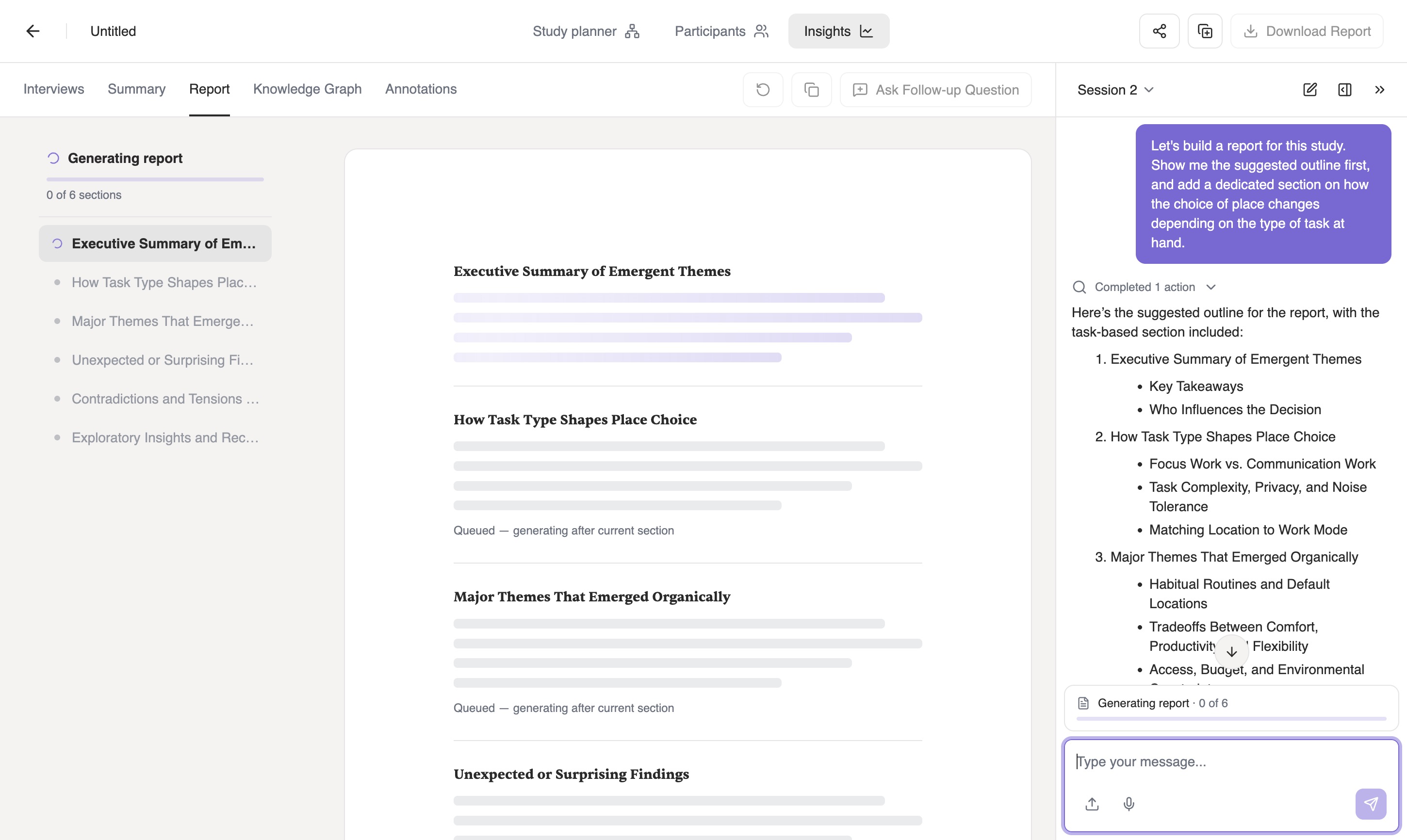
Ask Iris to build a report with a specific angle in mind, and it comes back with the outline first. The requested angle is already folded in as its own section, so you can redirect it before a word gets written.
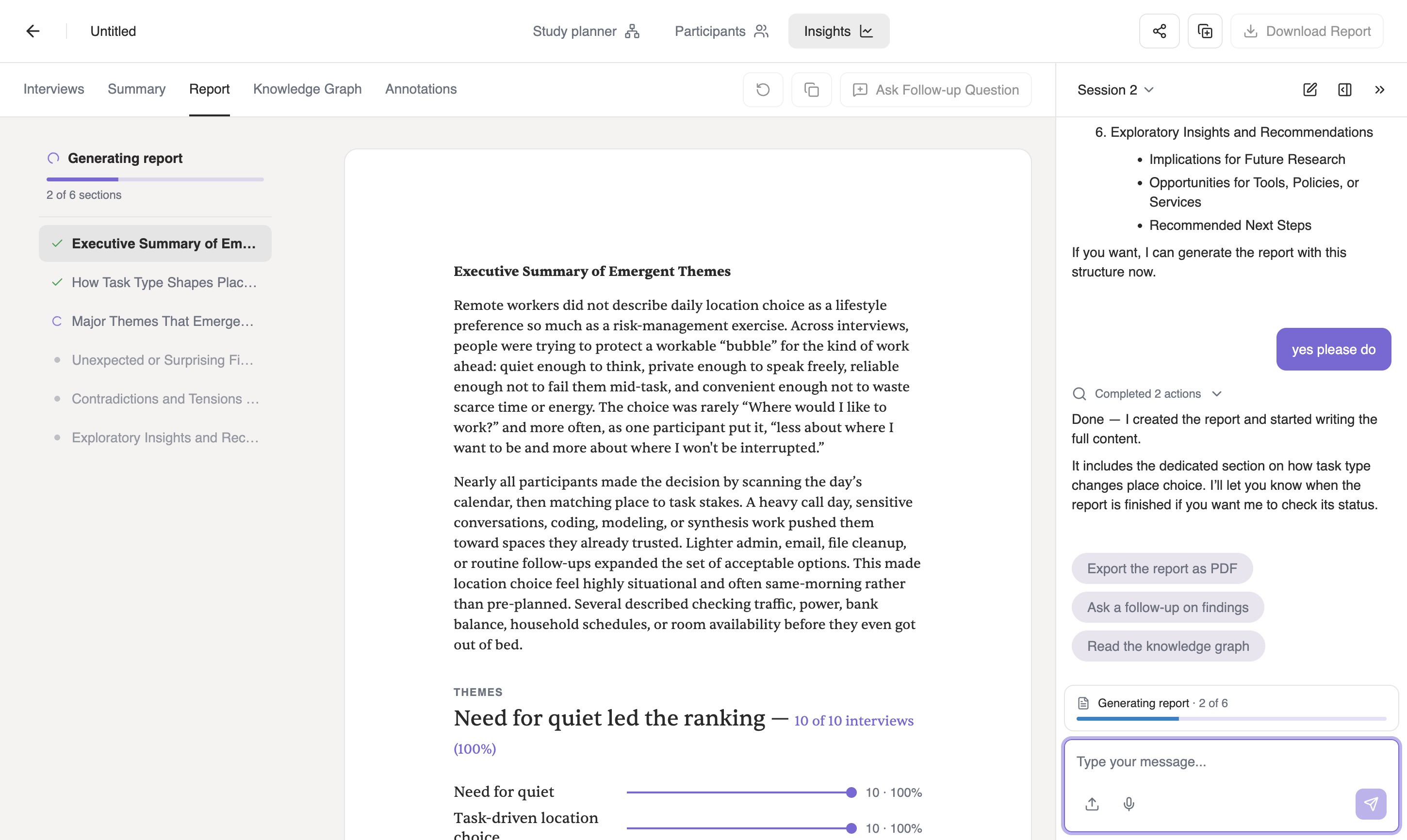
Approve it and it starts writing, section by section, telling you plainly that the section you asked for is in there.
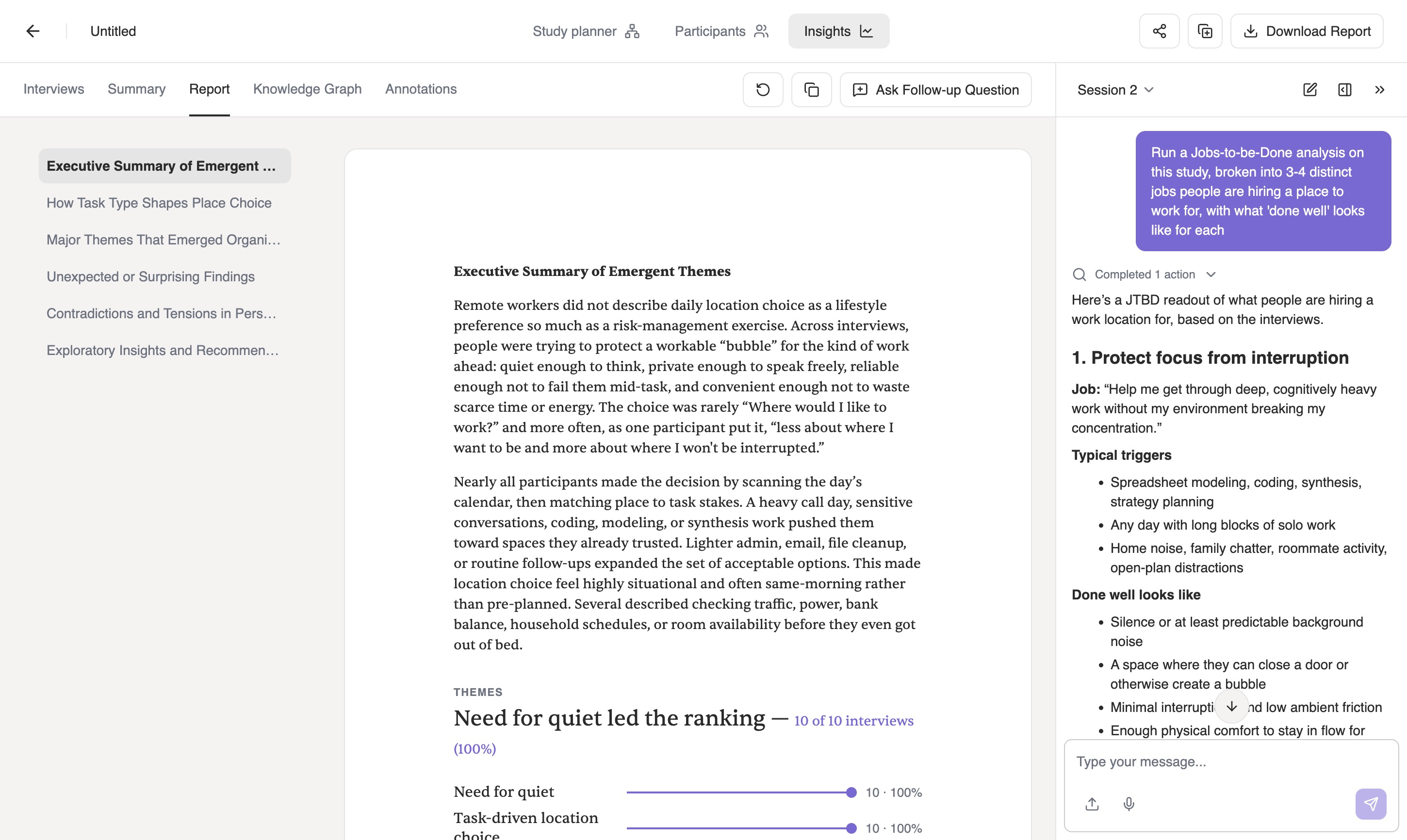
Apply an actual research framework, on request
The canned reports summarize findings; they don't structure them the way a specific research method would. Ask for one by name, and Iris applies it directly to this study's transcripts.
None of this needed a re-upload, a re-explanation of the research question, or a tab switch to a separate tool. It's one thread, grounded in one set of interviews, from the first message to the last.
Questions? Email us at support@syntheticusers.com.